

 Finland
43.0%
Finland
43.0%
 Australia
21.0%
Australia
21.0%
 Bulgaria
10.0%
Bulgaria
10.0%
 Greece
4.0%
Greece
4.0%
 Romania
3.0%
Romania
3.0%




















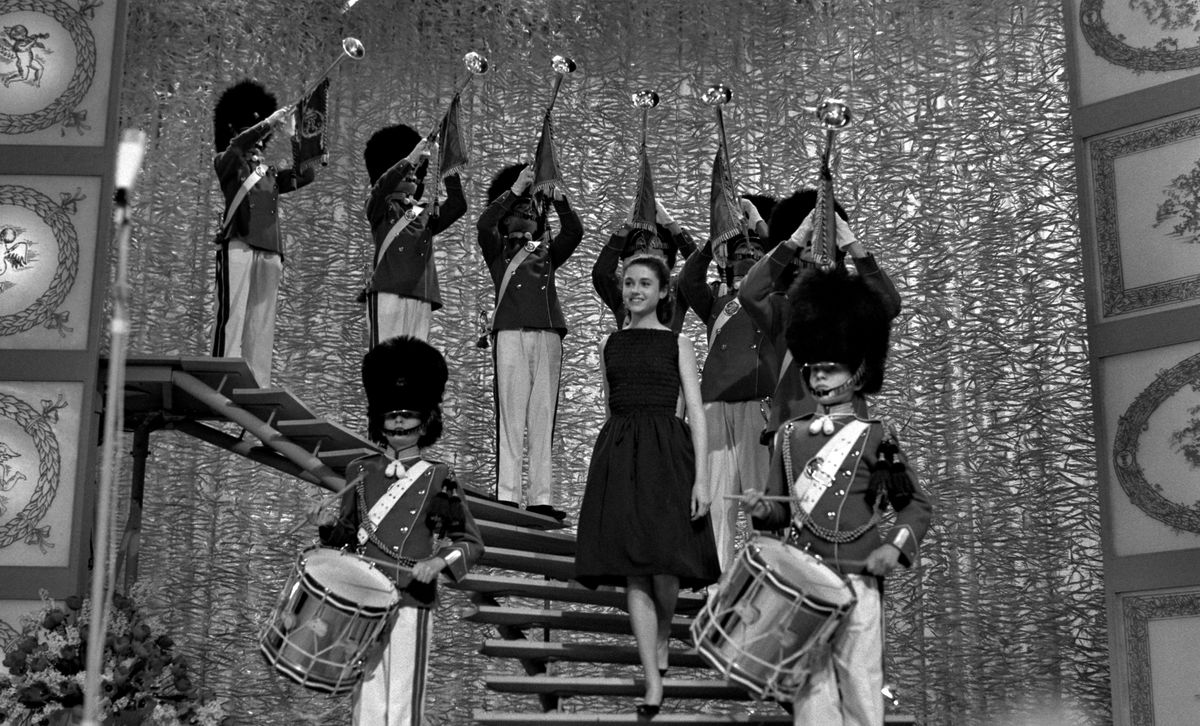
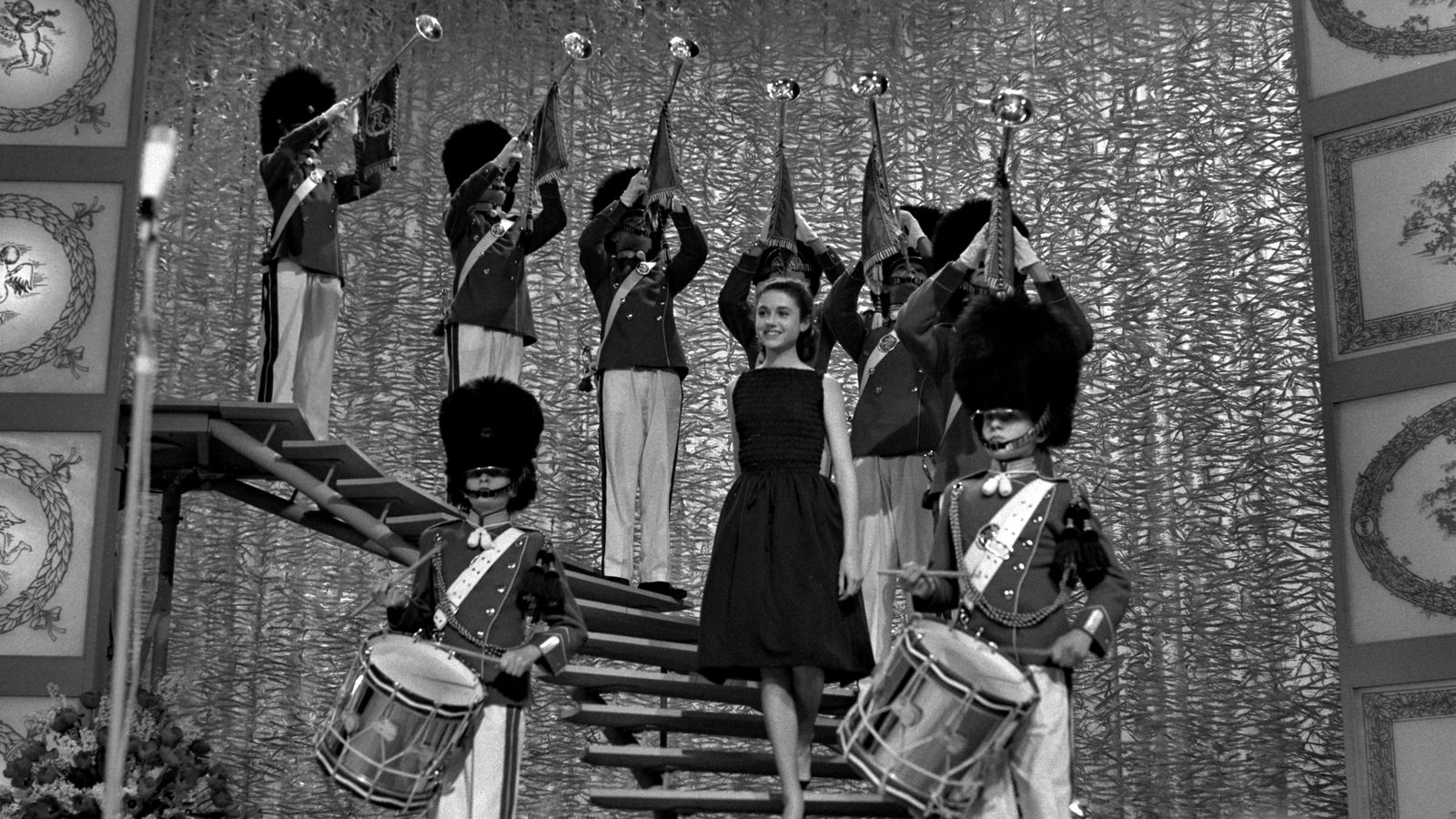
The 1964 Eurovision Song Contest, the ninth edition of the event, was held on March 21 in Copenhagen, Denmark, marking the first time the contest took place in the Nordic region. The event was hosted at the Tivoli Concert Hall, one year after Denmark's first Eurovision win with "Dansevise" by Grethe and Jørgen Ingmann.
Participants and Notable Debuts
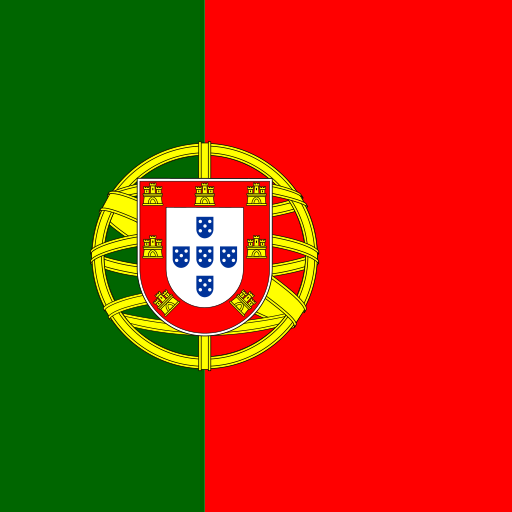
Sixteen countries participated for the fourth consecutive year. A key highlight was the debut of Portugal, represented by António Calvário with the song "Oração," marking the country's first appearance and becoming one of the first contenders to receive zero points, alongside Germany, Switzerland, and Yugoslavia.
Another remarkable debut was Austrian singer Udo Jürgens, who performed "Warum Nur, Warum?" and finished sixth. Jürgens went on to represent Austria again in 1965 and 1966, winning the contest with "Merci, Chérie" in 1966.
Switzerland's Anita Traversi participated for the third and final time, having previously performed backing vocals and represented Switzerland solo in earlier contests.
The United Kingdom sent Matt Monro, a well-known international artist, who performed "I Love The Little Things!" Monro notably released an English-language cover of Jürgens' song titled "Walk Away," which became a chart hit.
Contest Innovations and Scoring
Spain introduced the first group to Eurovision, with trio Tim, Nelly, and Tony performing "Caracola," though due to rules, only Nelly sang lead while the others provided backing vocals.
The Netherlands was represented by Anneke Grönloh, noted as the first Eurovision performer of color and the first born outside Europe, hailing from Indonesia.
A new scoring system was implemented, where juries had nine points to allocate to their top three songs: five points for their favorite, three for their second, and one for their third choice. The winning prize was an engraved silver medallion.
Italy's First Eurovision Victory
Italy achieved its inaugural victory thanks to 16-year-old Gigliola Cinquetti and her song "Non Ho l’Eta." Cinquetti set the record then as the youngest winner, a title held until 1986. She won by a significant margin with 49 points.
Gigliola would later return to Eurovision as a competitor in 1974, a host in 1991, and an interval act in 2022, commemorating her 1964 winning song.
Archival Discoveries and Preservation Efforts
Due to the limited television technology of the time, no complete video recordings of the 1964 contest were initially preserved, creating a legendary status around this 'lost' edition. Recently, thanks to Danish broadcaster DR's archives and the work of Finnish broadcaster Yle, previously lost footage of Gigliola Cinquetti's winning performance has been rediscovered and made available on Eurovision's official platforms.
In April 2026, Eurovision launched a global initiative to locate any missing recordings of the earliest contests, including 1956 and 1964, hoping that fragments or complete footage may still exist in private collections or archives.
This revisited look at Copenhagen 1964 provides fans new insight through archival pictures, artist stories, detailed voting data, and a renewed appreciation for one of Eurovision's most historic contests.
No comments yet. Start the conversation.